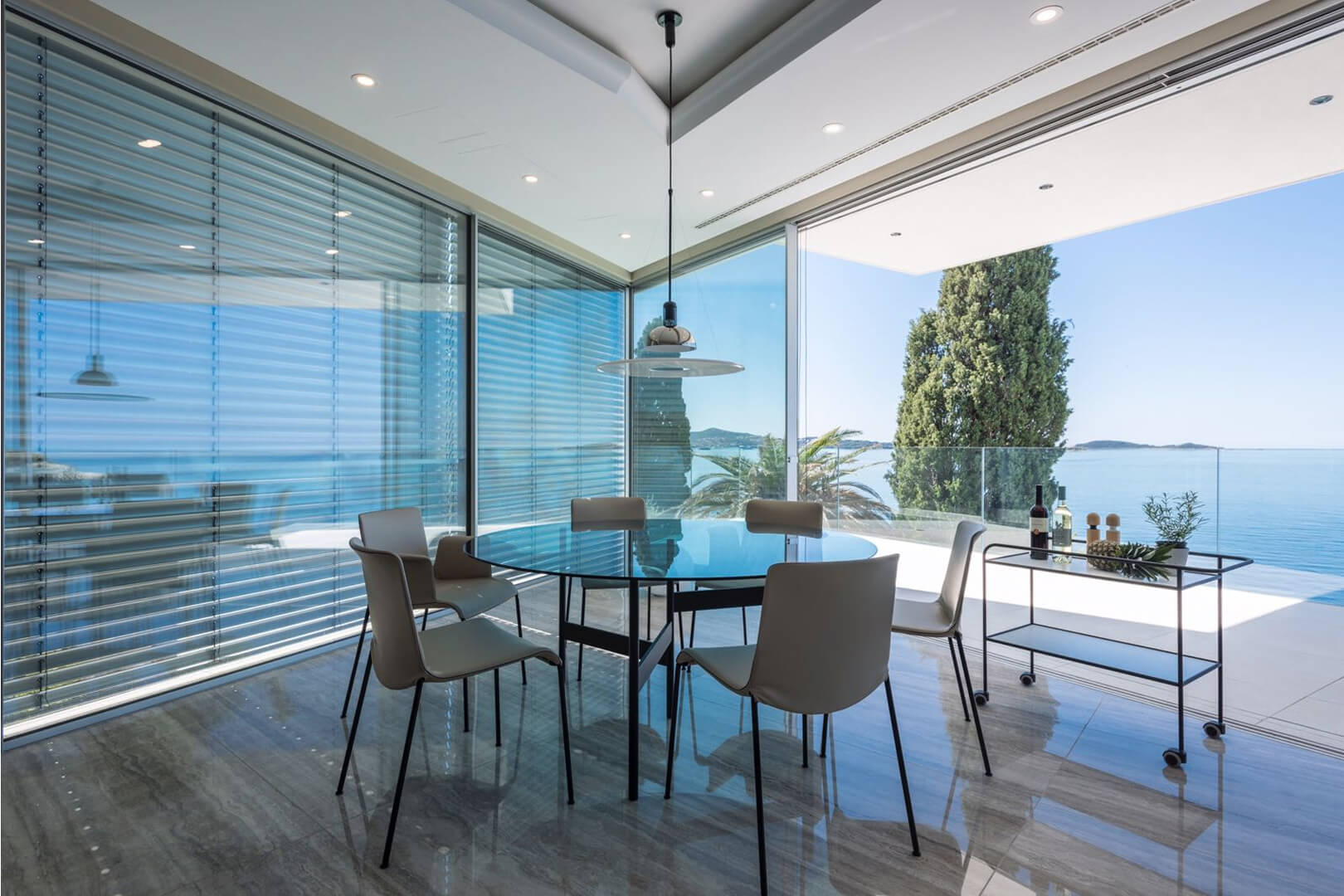
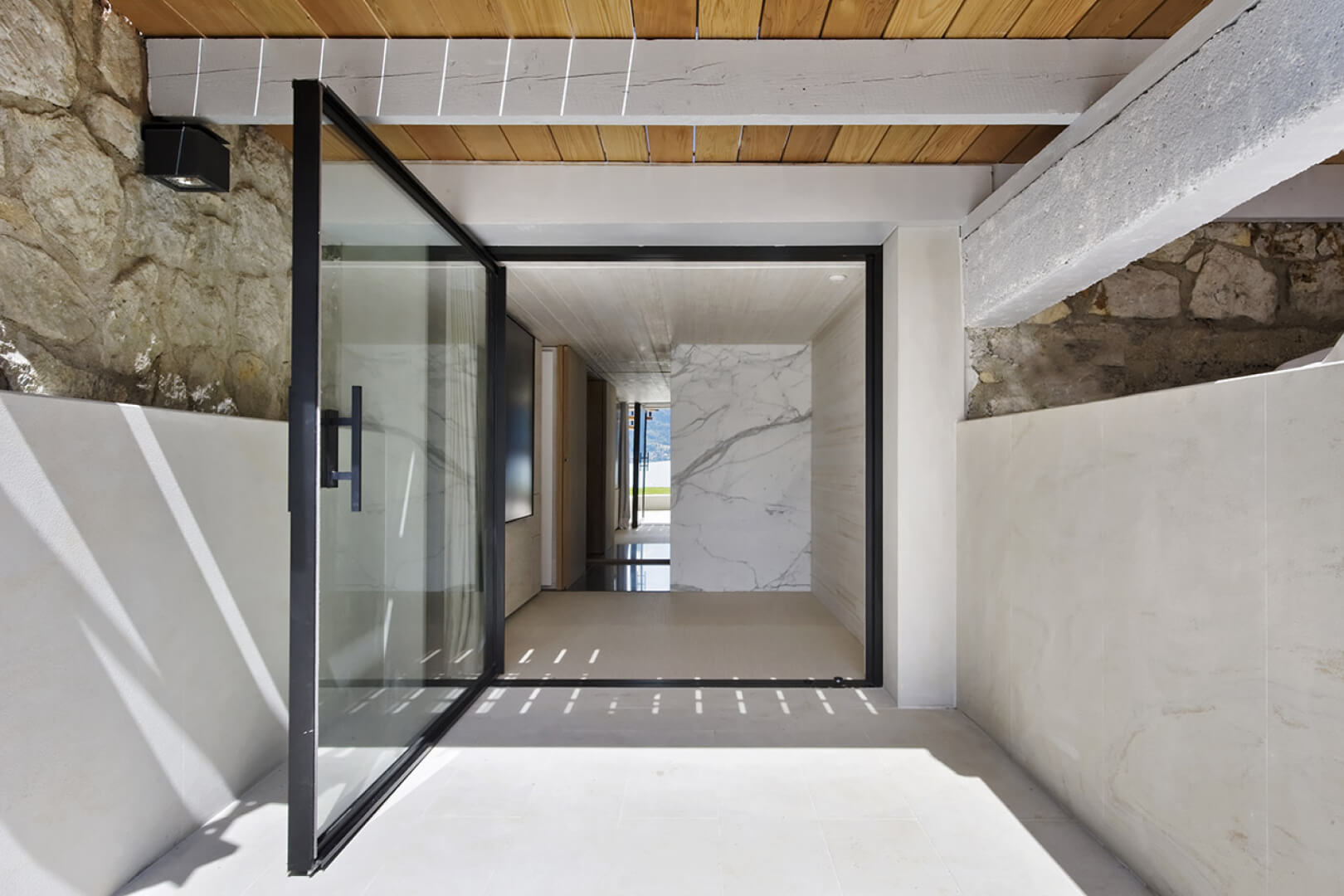
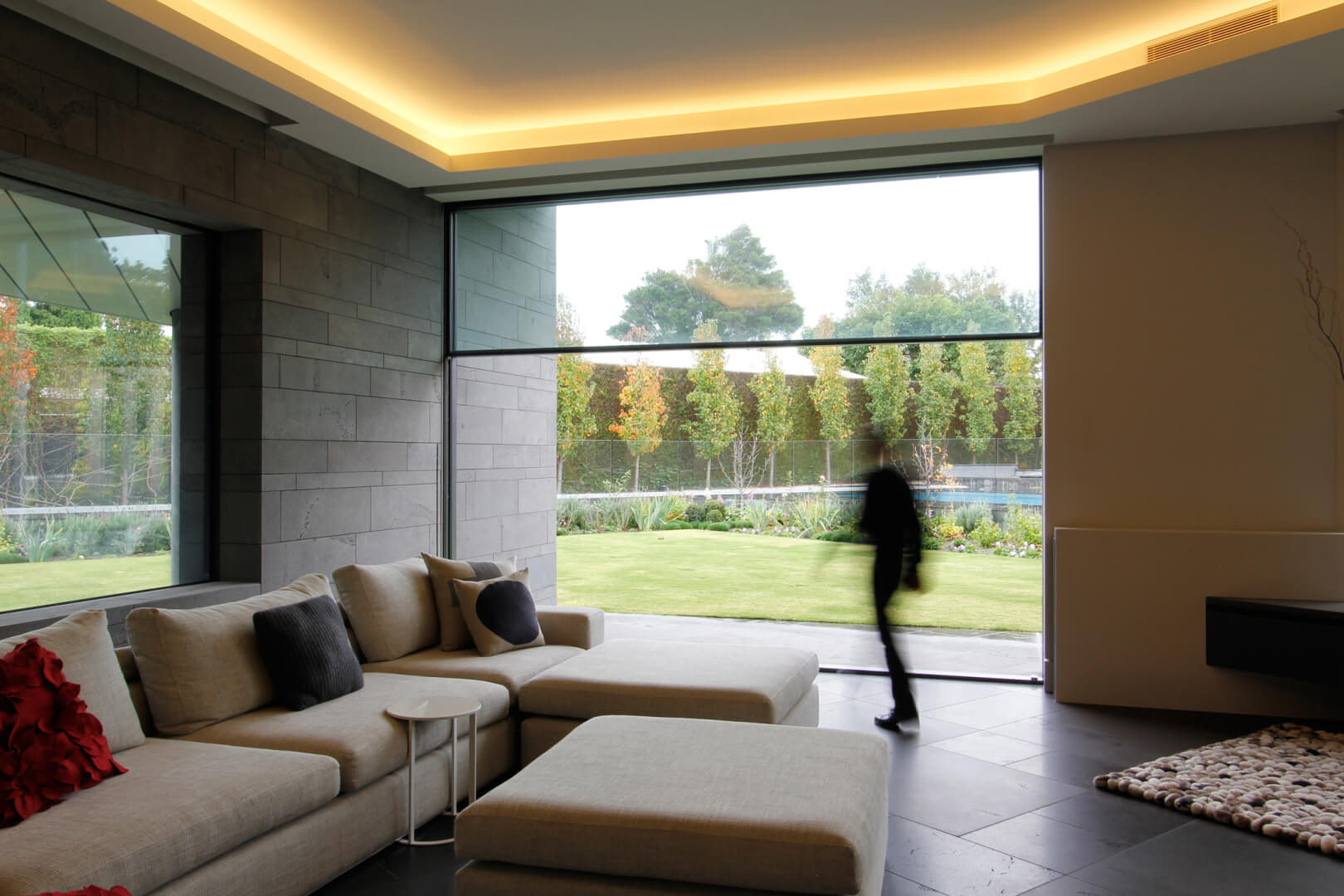
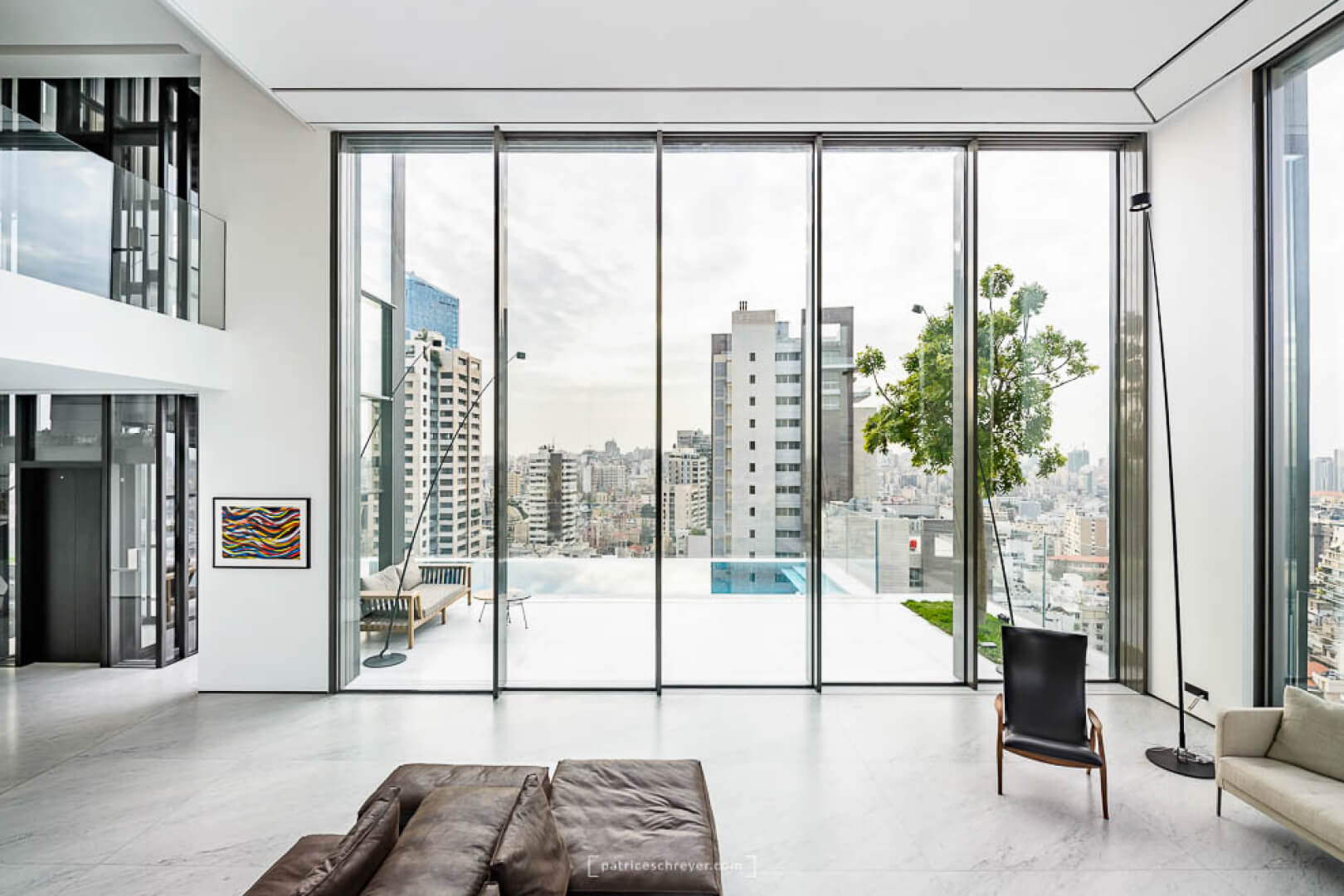
Add visual separation, soften unwanted views and give glass a refined architectural finish – with a solution planned around the room, sightlines, light and desired level of privacy.
Change What People See - Without Closing Off the Space
Decorative film gives homeowners, businesses and design teams more control over openness and privacy. The right coverage can hide direct sightlines, preserve daylight and make existing glass feel intentional within the room.
01
PRIVACY
Obscure direct views and create separation while retaining more natural light than many permanent wall or glass-replacement solutions.
02
DESIGN
Introduce a clean frosted finish, structured bands, gradients, patterns or approved custom elements that complement the architecture.
03
FLEXIBILITY
Transform existing glass with a removable film system rather than permanently etching or replacing the pane.
Frosted / obscuring
How It Works
Diffuses/obscures a direct view through the covered area.
Best For
Bathrooms, sidelights, offices, partitions.
Important to Know
May still show silhouettes or light/shadow.
Decorative pattern
How It Works
Breaks up sightlines using printed, textured or geometric visual coverage.
Best For
Design-led privacy and branding zones.
Important to Know
Privacy varies with pattern density and viewing angle.
Full opaque look
How It Works
Uses a more visually blocking treatment when available and compatible.
Best For
High-separation zones.
Important to Know
Reduces openness/light and must be verified by exact product.
Reflective solar film
How It Works
Makes viewing inward more difficult when the outside is brighter than inside.
Best For
Daytime exterior-facing privacy plus solar control.
Important to Know
Privacy can weaken or reverse at night.
Existing shades/blinds
How It Works
Physical covering controls the view independent of reflective light balance.
Best For
Reliable adjustable nighttime privacy.
Important to Know
Separate product; may still be needed with film.
Residential applications
Privacy Where the Home Needs It - Light Where It Still Matters.
Lumen helps plan the covered area around real sightlines, room use and the desired balance between privacy and natural light.
Bathrooms
Obscure direct views while retaining light
Entry doors + sidelights
Reduce direct sightlines and integrate with the entry design.
Home offices
Separate workspaces and soften distraction through interior glass
Bedrooms
Improve visual separation in selected daylight conditions.
Pantry/cabinet glass
Conceal contents or create a refined material finish.
Interior partitions
Create zoning without removing all light and openness.
From quiet visual separation to branded architectural details, decorative film can support the way customers, employees and project teams experience the space.
Conference rooms
Visual separation without turning glass walls into solid walls
Private offices
Reduce direct views while supporting daylight and design consistency
Medical/wellness offices
Create visual privacy in administrative or treatment-adjacent areas.
Retail/storefront interiors
Separate back-of-house, service or consultation areas
Hospitality/restaurants
Create zones and decorative glass moments.
Branded environments
Use approved custom graphics, patterns or logos where available.
Does frosted window film provide privacy day and night?
Frosted film obscures direct views regardless of reflective light balance, but silhouettes, shadows and movement may still be visible depending on opacity, distance, lighting and coverage.
Is reflective privacy film the same as frosted film?
No. Reflective solar film improves privacy mainly when the outside is brighter than inside and can lose that effect at night. Frosted/decorative film obscures the covered view in a different way.
Can decorative film be removed later?
Many films are removable, but removal effort and any adhesive cleanup depend on product, age, exposure, glass and condition. Confirm the selected material rather than promising damage-free removal in every case.
Can you create privacy bands or custom patterns?
Yes, where the selected material and production method support them. Final dimensions, alignment, artwork and proof must be approved before production.
Will decorative film reduce natural light?
It changes and diffuses light to varying degrees. The effect depends on the material, opacity, pattern and coverage; samples help set expectations.
Can you add our company logo?
Custom branding may be possible with production-ready vector artwork and brand approval. Lumen confirms material, color limitations, proof and installation details before production.
How is pricing determined?
Pricing depends on material, glass area, number of panes, design/cutting, artwork, access, installation conditions and removal. The $350 minimum service charge applies.
READY TO CREATE MORE PRIVACY WITH THE GLASS?
Let's Plan the Right Coverage for the Space.
Share the room, sightline, glass and desired look. Lumen will help determine the appropriate material, coverage and next step.